Every year, over one billion end-of-life tires reach the end of their road. Stockpiling them invites disease, fire hazards, and toxic runoff. Yet, within these mountains of rubber lies a hidden refinery: hydrocarbons originally derived from crude oil. A tyre oil plant unlocks this potential through pyrolysis—a thermal conversion process that transforms waste tires into valuable fuel, carbon black, and steel. This guide provides a complete, technical walkthrough of how modern tyre-to-oil plants operate, what determines the quality of the output, and where the resulting products find industrial application. Whether you are an investor, environmental engineer, or policy maker, understanding these systems is the first step toward profitable and responsible waste management.
How a Tyre Oil Plant Works: The Step-by-Step Process
The core technology inside any tyre-to-oil facility is oxygen-free thermal cracking. Unlike incineration (which burns tires with oxygen to produce heat, smoke, and ash), pyrolysis heats tires in a sealed reactor. Without oxygen, the rubber polymers cannot burn. Instead, they break apart into smaller hydrocarbon molecules. A complete tire pyrolysis process follows four distinct phases. First, pre-treatment: in continuous plants, tires are shredded into 3–5 cm chips and steel wires are removed. In batch plants, whole tires are fed directly. Second, thermal cracking: the reactor heats slowly. Between 250°C and 450°C, the polymer chains collapse, releasing oil vapor and combustible gas. Third, condensation: the oil vapor passes through a manifold into condensers, where it cools back into liquid pyrolysis oil. Non-condensable gas is scrubbed and recycled as fuel to heat the reactor. Fourth, solid discharge: the remaining carbon black and steel wires are cooled and separated. The entire cycle creates zero oxygen exposure, ensuring that the output is a clean, storable product rather than toxic smoke.
Key Equipment Inside a Tyre Pyrolysis Plant
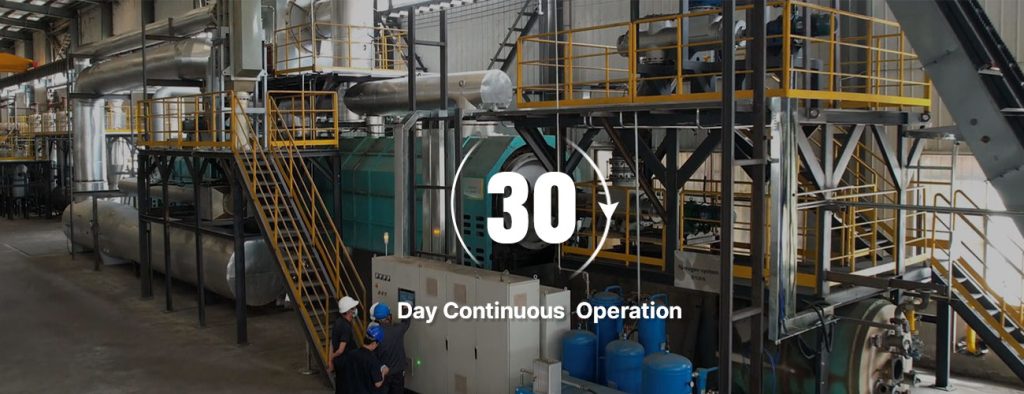
Not all pyrolysis machines perform equally. The design of the reactor, feeding system, and condensation train directly determines oil yield, operational safety, and uptime. A professional tyre oil plant typically includes a horizontal rotary kiln reactor (which rotates to ensure even heat distribution), a hydraulic or screw feeder (to seal out oxygen during loading), a multi-stage condensation system (shell-and-tube heat exchangers that recover different oil fractions), and a water-cooled carbon black discharger. The reactor’s material matters: high-grade stainless steel or Q345R boiler plate resists the corrosive gases released during pyrolysis. Additionally, a dedicated gas recovery system routes non-condensable gases back to the burner, reducing external fuel consumption by up to 80%. Continuous plants also require a shredder and magnetic separator for steel removal before feeding. Batch plants, while simpler, require manual steel extraction after each cycle. For operators seeking consistent, industrial-grade output, continuous systems with automated feeding and discharging are the preferred choice.
Product Quality: What Determines Good Tyre Pyrolysis Oil?
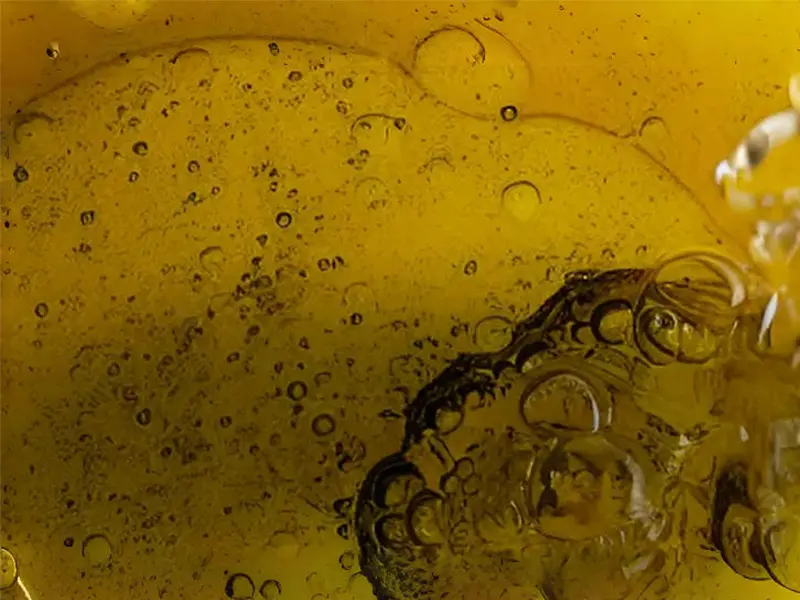
The liquid product from a tyre oil plant is not a single, uniform fuel. Its quality varies based on feedstock, temperature, residence time, and post-treatment. Raw tyre pyrolysis oil is a dark, viscous liquid with a distinct sulfur odor. Its calorific value typically ranges from 38–42 MJ/kg—comparable to industrial diesel. However, it contains high levels of sulfur (often 0.5–1.5%), aromatics (benzene, toluene, xylene), and ash. For direct use as boiler fuel or in cement kilns, this raw oil is acceptable. For upgrading to road diesel or marine fuel, it requires distillation and hydrodesulfurization. The single most influential factor for oil quality is the pyrolysis temperature profile. Operating at 400–450°C maximizes liquid yield and produces a lighter oil with lower viscosity. Exceeding 550°C cracks the hydrocarbons further, producing more gas and a heavier, more aromatic oil. A modern Beston pyrolysis plant integrates temperature sensors and automated burner controls to hold the reactor within this optimal band. Additionally, using catalysts (such as zeolites or natural minerals) during the reaction can reduce sulfur content and increase the proportion of aliphatic (cleaner-burning) hydrocarbons, yielding oil that requires less post-processing.
Applications of Tyre Pyrolysis Products
A tire pyrolysis equipment produces four distinct revenue streams. The most valuable is pyrolysis oil (40–45% of tire weight), which serves as industrial fuel for boilers, steel reheating furnaces, and heavy-duty generators. After distillation, it can be refined into commercial diesel and naphtha. The second product is recovered carbon black (rCB) (30–35% yield). While lower in structure than virgin carbon black, rCB is used as a reinforcing filler in low-grade rubber products, a black pigment for plastics and inks, and an asphalt modifier. Deep processing (grinding and pelletizing) upgrades rCB to semi-reinforcing grades like N660. The third product is steel wire (15–20% yield). Because pyrolysis occurs below 500°C, the spring steel wire retains most of its tensile strength and can be sold to steel mills or foundries. The fourth product is combustible gas (5–7% yield), which is typically recycled back into the reactor’s heating system, reducing operating costs. Some plants also recover a small amount of wax or light naphtha through staged condensation. Together, these products achieve a near-total material recovery rate, leaving only minimal char residue.
Factors That Optimize Oil Yield and Quality
Operating a tyre oil plant profitably requires controlling five critical variables.
- Temperature is the most important: lower than 350°C leaves rubber undecomposed (low oil yield), while above 600°C favors gas production (reduced oil yield). The optimum range for maximum liquid yield is 400–450°C.
- Residence time (how long the vapor stays in the hot zone) must be balanced: too short gives incomplete cracking, too long allows secondary reactions that form wax and gas. Typical solid residence time is 60–120 minutes, while vapor residence time is kept under 2 seconds.
- Particle size affects heat transfer: shredded tires (3–5 cm) pyrolyze faster and more completely than whole tires, though whole tires are acceptable in batch plants. Heating rate controls product selectivity: slow heating increases solid char, while fast heating increases gas. For oil maximization, a moderate heating rate of 5–10°C per minute is ideal.
- Catalysts (e.g., ZSM-5, natural zeolite) lower activation energy, reduce sulfur, and shift the product distribution toward lighter, more valuable hydrocarbons. However, they add cost and complexity. Most commercial plants optimize temperature and residence time first before considering catalytic upgrades.
Conclusion: Turning a Waste Problem into an Energy Solution
A well-engineered tyre oil plant is not merely a recycling machine—it is a distributed refinery. By harnessing controlled pyrolysis, operators can extract the embedded fossil energy from waste tires, producing usable fuel, industrial carbon, and steel. The key to success lies in process discipline: sorting tires, controlling temperature within the 400–450°C window, managing residence time, and investing in multi-stage condensation. While raw pyrolysis oil requires further treatment for high-end applications like road diesel, its value as an industrial boiler fuel or as a feedstock for distillation is well established. As global regulations tighten against tire dumping and open burning, the economic and environmental case for tyre pyrolysis will only strengthen. Whether you are evaluating a small batch system or a continuous industrial line, the fundamentals remain the same: seal out oxygen, apply controlled heat, and recover every molecule. That is the complete guide—and the complete opportunity.